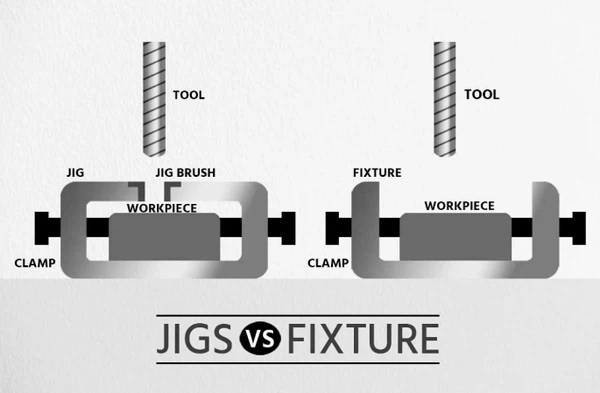
Precision machining is not achieved by CNC machines alone. It is the result of controlled processes where every variable is managed carefully. One of the most influential yet underestimated factors is jig and fixture design. It defines how a workpiece is located, supported, and secured during machining, directly affecting accuracy, repeatability, and surface quality. When this foundation is weak, even the most advanced CNC programs fail to deliver consistent results.
As industries demand tighter tolerances and faster turnaround times, manufacturers can no longer rely on generic workholding solutions. Thoughtful design transforms machining from a trial-and-error activity into a predictable and scalable process. It reduces uncertainty on the shop floor and allows CNC systems to operate at their intended performance level.
The Strategic Importance of Jig and Fixture Design
Establishing Dimensional Control
Dimensional accuracy begins before the spindle starts rotating. Jig and fixture design establishes reference points that define the part’s exact position relative to cutting tools. These reference points remove variation caused by manual alignment and ensure that every feature is machined from the correct datum. When location is consistent, tolerances become easier to achieve and maintain.
This control is especially important for parts with multiple critical features. Machining relationships between holes, slots, and faces depends on stable positioning. Without it, dimensional stack-up errors occur, leading to assembly issues and rejected components.
Protecting Part Integrity During Machining
Cutting forces generated during CNC operations can distort or shift inadequately supported parts. Thoughtful jigs and fixtures distribute these forces evenly, preventing movement and deformation. This protection preserves both dimensional accuracy and surface finish throughout the machining cycle.
By maintaining part integrity, manufacturers reduce the risk of micro-defects that may not be immediately visible but can cause functional failures later. Proper support ensures that parts perform as designed in real-world applications.
Engineering Principles Behind Effective Workholding
Balanced Constraint and Support
One of the core principles of jig and fixture design devices is applying the right amount of constraint. Every workpiece must be fully restrained in all required degrees of freedom, but excessive clamping can introduce stress. Designers carefully select locating surfaces, pins, and clamps to achieve stability without distortion.
Balanced support is particularly critical for thin-walled or complex components. Strategic placement of supports allows machining forces to be absorbed safely while maintaining dimensional stability. This balance separates professional fixture design from improvised solutions.
Tool Access and Process Flow
Effective jigs and fixtures support machining rather than complicate it. Designers must anticipate tool paths, approach angles, and chip evacuation requirements. Clamps and locators are positioned to avoid interference with cutting tools while maintaining secure holding.
Smooth process flow improves both safety and productivity. Operators can load and unload parts quickly, and machines can perform uninterrupted cycles. Good accessibility also reduces tool wear and prevents costly collisions.
Role of Jigs and Fixtures Tooling in Production Efficiency
Faster and More Reliable Setups
Setup time has a direct impact on production cost. Jigs and fixtures tooling simplify setups by eliminating repeated measurements and adjustments. Operators place parts into predefined locations, clamp them, and begin machining with confidence.
This efficiency is especially valuable in high-mix environments. Frequent job changes no longer disrupt production schedules. Consistent setups ensure that quality remains stable even as product variety increases.
Enabling Repeatable Manufacturing
Repeatability is essential for quality assurance. When the same fixture is used across multiple production runs, machining results remain consistent over time. This repeatability simplifies inspection processes and reduces variability in finished parts.
Reliable workholding also supports process optimization. Once a setup is validated, manufacturers can focus on improving cycle times and tool paths without worrying about positioning errors.
Managing Complex and High-Precision Components
Supporting Challenging Geometries
Modern products often feature complex shapes that standard workholding cannot handle. Custom jigs and fixtures provide tailored support for irregular geometries, ensuring secure positioning without damaging sensitive features. Contoured supports and adaptive clamping solutions are commonly used in these scenarios.
These custom approaches allow complex parts to be machined accurately in fewer setups. Reducing repositioning lowers cumulative error and improves overall part quality.
Multi-Operation Machining Strategies
Precision machining often requires multiple operations on different faces of a part. Well-designed fixtures allow several machining steps to be completed in a single setup. This approach maintains feature relationships and improves alignment accuracy.
Benefits of multi-operation fixture strategies include:
- Improved positional accuracy between features
- Reduced handling and setup time
- Lower risk of part damage during transfer
By consolidating operations, manufacturers achieve higher efficiency without sacrificing quality.
Quality and Cost Implications of Fixture Design
Reducing Scrap and Rework Rates
Poor workholding is a common source of scrap. Even small movements during cutting can push features out of tolerance. Thoughtful jig and fixture design devices prevent such issues by maintaining stability throughout the machining process.
Lower scrap rates protect margins and improve delivery reliability. Reduced rework also frees machine capacity, allowing shops to handle more orders without expanding equipment.
Long-Term Operational Savings
Although custom fixtures require upfront investment, their long-term value is substantial. Reduced setup time, longer tool life, and consistent quality translate into measurable cost savings. Over time, these benefits often exceed the initial cost of design and fabrication.
Durable fixtures also reduce maintenance needs. High-quality materials and robust construction ensure long service life, making them a cost-effective asset for repeated production cycles.
Aligning Fixture Design with Modern CNC Practices
Supporting Automation and Robotics
As CNC shops adopt automation, fixture design must evolve accordingly. Fixtures intended for robotic loading require precise and repeatable locating features. Consistency allows automation systems to operate reliably without constant adjustment.
Automation-ready jigs and fixtures also support unattended machining. When positioning and clamping are predictable, machines can run longer with minimal supervision, increasing overall productivity.
Integration with Digital Planning
Digital manufacturing tools now allow fixture concepts to be evaluated before physical production. Simulation helps engineers assess clamping forces and accessibility, reducing trial-and-error on the shop floor. This integration shortens development cycles and improves first-pass success rates.
Digital planning also enhances collaboration between design and manufacturing teams. Fixture strategies align more closely with part geometry and machining objectives from the start.
Conclusion
Precision machining depends on more than advanced equipment and skilled operators. Thoughtful jig and fixture design provides the structural foundation that allows CNC processes to perform reliably and efficiently. By controlling part position, supporting complex geometries, and enabling repeatable workflows, well-engineered workholding solutions reduce risk and enhance quality. Manufacturers who invest in proper fixture design gain consistency, efficiency, and confidence in every machined component they produce.
