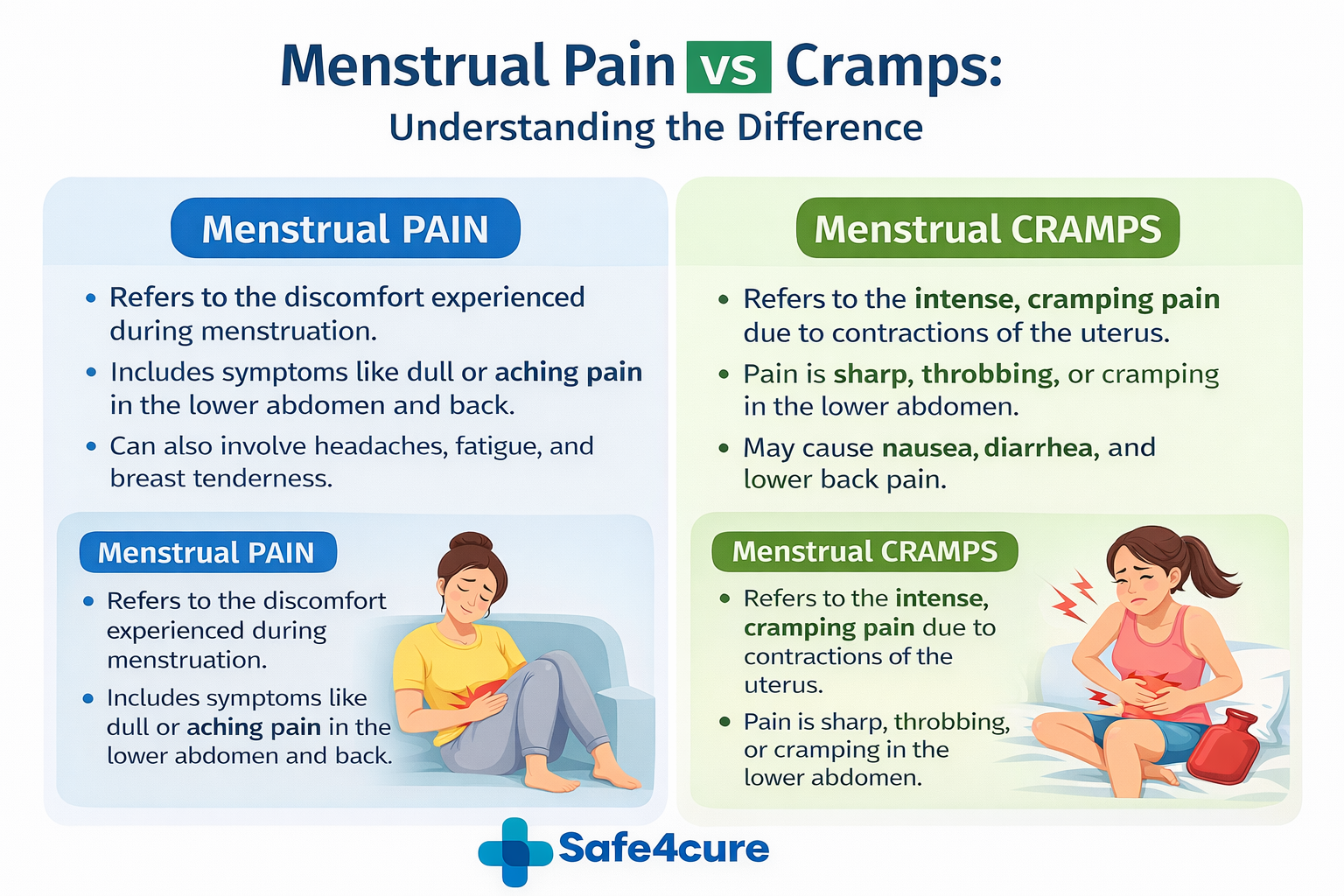
Every month, millions of women across the United States experience some form of discomfort during their period. However, menstrual pain vs cramps are not always the same thing. While they are closely connected, they can differ in cause, intensity, and how they respond to treatment. Recognizing this difference can help you better manage your symptoms, communicate more effectively with your doctor, and choose treatments that actually work for your body. Instead of simply accepting it as “just part of being a woman,” understanding what’s happening allows you to take informed action if something feels unusual. In many cases, medications such as celecoxib 100 mg, a nonsteroidal anti-inflammatory drug (NSAID), are used to relieve pain, swelling, and stiffness from osteoarthritis, rheumatoid arthritis, ankylosing spondylitis, and menstrual pain, helping women manage discomfort more effectively.
What Are Period Cramps, Exactly?
Let’s start with the basics. Menstrual cramps feel like a throbbing or cramping pain in your lower abdomen. They usually kick in just before your period starts and can last anywhere from one to three days. For most people, period cramps are often mild to moderate — annoying enough to notice, but manageable with basic remedies.
These cramps happen because your uterus contracts to help shed its lining. The hormone-like substances called prostaglandins trigger these contractions. The higher the prostaglandin levels, the stronger the contractions — and the more intense the cramps.
Mild cramps might feel like a dull ache in your lower belly or back. Moderate cramps can make you want to curl up on the couch with a heating pad. Either way, they’re super common and affect more than half of menstruating women in the U.S. at some point in their lives.
So What Is Menstrual Pain (Dysmenorrhea)?
Here’s where things get a little more specific. The clinical term for painful periods is dysmenorrhea. The dysmenorrhea meaning, in simple terms, is period pain that goes beyond ordinary discomfort — pain that’s intense enough to interfere with your daily life.
There are two types:
Primary dysmenorrhea is the most common kind. It’s not caused by any underlying condition — it’s just your body producing a lot of prostaglandins, leading to stronger-than-normal uterine contractions. This is the type most younger women experience, often starting within a year or two of their first period.
Secondary dysmenorrhea is different. This type is caused by an underlying reproductive health condition like endometriosis, uterine fibroids, pelvic inflammatory disease (PID), or adenomyosis. The pain tends to be more severe, starts earlier in the cycle, and often lasts longer than typical cramps. This is the type that warrants a conversation with your gynecologist.
So the difference? Cramps are a normal physiological response. Menstrual pain — especially dysmenorrhea — can be a signal that something else is going on underneath.
How to Tell the Difference Between Menstrual Pain vs Cramps
Wondering whether what you’re experiencing is just regular menstrual pain vs cramps or something that needs medical attention? Here are some signs to watch for:
Typical cramps:
- Begin 1–2 days before your period
- Last 2–3 days at most
- Respond well to over-the-counter pain relievers or a heating pad
- Don’t dramatically affect your ability to work, go to school, or function
Possible dysmenorrhea or underlying condition:
- Pain starts days before your period even begins
- Pain is so severe it disrupts your routine
- OTC medications barely touch the pain
- You experience pain during sex or bowel movements
- Symptoms are getting worse over time
If you’re relating strongly to that second list, it’s worth making an appointment with your healthcare provider. This is especially important for women in the U.S. where conditions like endometriosis — which affects roughly 1 in 10 women — are often underdiagnosed for years.
What Helps Period Cramps?
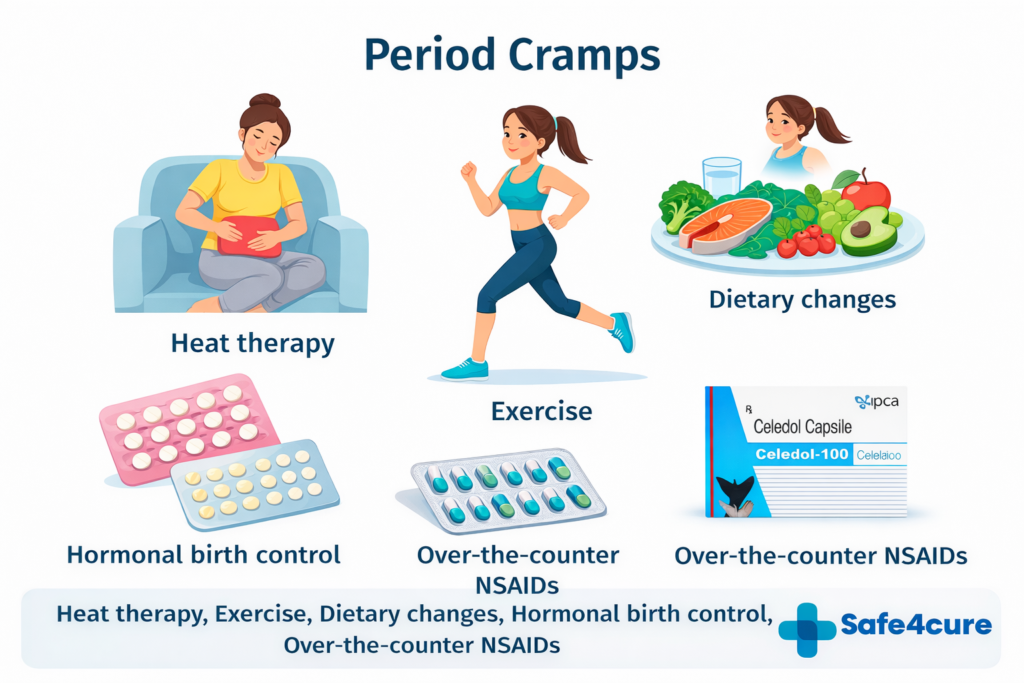
Now for the part everyone wants to know — what actually works? Here’s a breakdown of real, effective options:
Heat therapy is one of the most accessible and effective remedies. A heating pad on your lower abdomen can relax the uterine muscles and significantly reduce pain. Studies have shown it can be as effective as ibuprofen for mild to moderate cramps.
Exercise might be the last thing you want to do when you’re cramping, but light movement like walking or yoga can actually help by boosting circulation and releasing endorphins — your body’s natural painkillers.
Dietary changes matter more than most people think. Reducing salt, sugar, caffeine, and alcohol in the days leading up to your period can lower bloating and inflammation. Adding anti-inflammatory foods like leafy greens, fatty fish, and turmeric may also help.
Hormonal birth control is often prescribed by doctors specifically to manage painful periods or menstrual cramps. Pills, patches, or hormonal IUDs can reduce or eliminate painful symptoms for many women.
Over-the-counter NSAIDs like ibuprofen or naproxen are often the first-line recommendation. They work by blocking prostaglandins, which directly reduces uterine contractions and pain. For best results, start taking them a day before your period begins rather than waiting until the pain hits.
Celecoxib: A Prescription Option for Severe Menstrual Pain
When OTC medications don’t cut it, doctors sometimes turn to prescription-strength options. One such medication is celecoxib 100mg, a nonsteroidal anti-inflammatory drug (NSAID) used to relieve pain, swelling, and stiffness from osteoarthritis, rheumatoid arthritis, ankylosing spondylitis, and menstrual pain.
The celecoxib brand name most people recognize is Celebrex, though it’s also available as a generic medication now, making it more affordable and widely accessible across the U.S.
What makes celecoxib unique is its mechanism of action. It’s a COX-2 inhibitor, meaning it selectively blocks the COX-2 enzyme responsible for producing prostaglandins and inflammation without significantly affecting the COX-1 enzyme that protects the stomach lining. This makes it easier on the stomach compared to traditional NSAIDs like ibuprofen, which block both COX-1 and COX-2.
For women with severe dysmenorrhea or those who experience GI irritation with standard NSAIDs, celecoxib can be a better-tolerated option. It’s typically taken as directed by a physician and should not be used long-term without medical supervision.
Important: Always talk to your doctor before starting celecoxib. It’s not appropriate for everyone, especially those with a history of heart disease or certain GI conditions. Your healthcare provider can help determine if it’s the right fit for you.
How to Relieve Period Cramps at Home (Practical Tips)
Here’s a quick rundown of home remedies that genuinely help with how to relieve period cramps:
- Apply heat to your lower abdomen for 20–30 minutes at a time
- Stay hydrated — bloating and dehydration can make cramps worse
- Try magnesium supplements — research suggests magnesium can reduce cramp severity
- Practice gentle yoga or stretching poses like child’s pose or supine twists
- Use essential oils — some studies suggest lavender aromatherapy may reduce pain perception
- Cut back on caffeine during your period, as it can tighten blood vessels and worsen cramping
- Sleep with a pillow between your knees if lower back pain is a big issue
When to See a Doctor of Menstrual Pain vs Cramps
You should schedule an appointment with your OB-GYN or primary care provider if:
- Your pain is getting progressively worse each cycle
- You’re missing work, school, or social activities regularly because of period pain
- Over-the-counter medications aren’t providing enough relief
- You have pain during sex or outside of your period
- You’ve noticed unusual bleeding patterns or spotting
In the U.S., telehealth has made it easier than ever to consult with a gynecologist from home. Many insurance plans now cover these visits, so don’t let logistics be a barrier to getting the care you deserve.
FAQs
Q: Is it normal to have severe cramps every month?
A: Mild to moderate cramps are common, but severe pain every cycle — especially pain that disrupts your daily life — is not something you should just push through. That level of pain warrants a medical evaluation to rule out conditions like endometriosis or fibroids.
Q: What’s the difference between primary and secondary dysmenorrhea?
A: Primary dysmenorrhea is pain caused by normal uterine contractions with no underlying condition. Secondary dysmenorrhea is pain caused by a reproductive health issue like endometriosis or adenomyosis. Secondary dysmenorrhea typically requires medical treatment beyond pain relievers.
Q: Can celecoxib be used specifically for period pain?
A: Yes. Celecoxib 100mg, sold under the brand name Celebrex and available as a generic medication, is an NSAID and COX-2 inhibitor that has been used to treat menstrual pain. It’s a prescription medication, so you’ll need to discuss it with your doctor first.
Q: Are period cramps worse in your 20s or 30s?
A: For many women, primary dysmenorrhea actually improves with age or after childbirth. However, if cramps suddenly become worse in your 30s or 40s, that could signal a new underlying condition and should be checked out.
Q: Does diet actually affect period cramps?
A: Research suggests it can. Anti-inflammatory diets rich in omega-3 fatty acids, fruits, and vegetables may help reduce prostaglandin production and cramp severity. On the flip side, high-sugar and high-fat diets may make inflammation and therefore cramps worse.
Q: Are there non-medication ways to manage dysmenorrhea long-term?
A: Absolutely. Regular aerobic exercise, stress management (since cortisol can worsen inflammation), a balanced diet, and acupuncture have all shown some evidence of reducing period pain over time. These work best alongside, not instead of, medical guidance.
