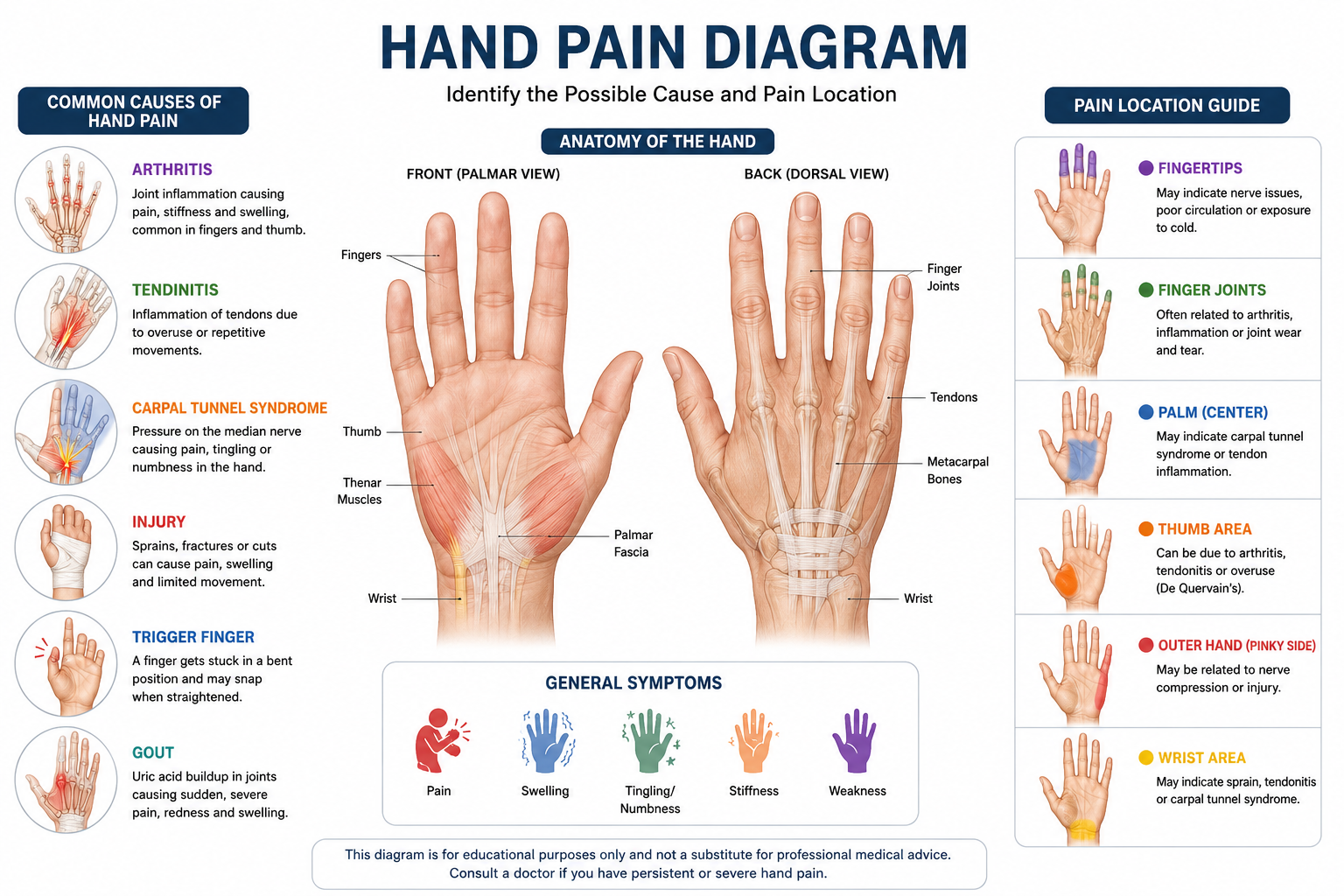
Hand pain can significantly affect your daily life, making simple activities like writing, typing, cooking, driving, or lifting objects difficult and uncomfortable. Whether the pain develops suddenly after an injury or gradually over time, identifying the exact location of discomfort is often the first step toward finding the underlying cause. This is where a hand pain diagram becomes an invaluable tool. It helps individuals, healthcare professionals, and therapists pinpoint the affected area and better understand what condition may be responsible for the pain.
A hand pain diagram visually maps different parts of the hand—including the fingers, thumb, palm, knuckles, wrist, and back of the hand—to show where pain occurs. Since different structures such as bones, muscles, tendons, ligaments, nerves, and joints occupy specific regions of the hand, the location of pain often provides important clues for diagnosis.
In this comprehensive guide, you’ll learn what a hand pain diagram is, how to interpret different pain locations, common causes of hand pain, symptoms to watch for, treatment options, prevention strategies, and answers to frequently asked questions.
What Is a Hand Pain Diagram?

A hand pain diagram is a medical illustration that identifies different regions of the hand to help locate pain, numbness, swelling, stiffness, or other symptoms. Healthcare providers often use these diagrams during examinations to understand where patients experience discomfort and how it relates to the hand’s anatomy.
A typical hand pain diagram includes:
- Thumb
- Index finger
- Middle finger
- Ring finger
- Little finger
- Palm
- Knuckles
- Wrist
- Back of the hand
- Finger joints
- Tendons
- Nerves
By marking the painful area on the diagram, patients can provide more accurate information, helping doctors determine whether the issue involves a joint, tendon, ligament, muscle, nerve, or bone.
Understanding Different Areas of Hand Pain
The location of pain often provides valuable clues about its cause. Different parts of the hand are associated with different medical conditions.
Thumb Pain
Pain around the thumb commonly results from arthritis, tendon inflammation, repetitive strain, or ligament injuries. It may become more noticeable when gripping objects, opening jars, or writing.
Finger Pain
Pain in one or more fingers may be caused by arthritis, trigger finger, fractures, tendon injuries, or nerve compression. Some people also experience stiffness and swelling, especially in the morning.
Palm Pain
Pain in the palm can result from muscle strain, tendon irritation, ganglion cysts, or nerve conditions such as carpal tunnel syndrome. The discomfort may worsen during activities requiring prolonged gripping.
Knuckle Pain
Pain around the knuckles frequently occurs because of osteoarthritis, rheumatoid arthritis, injuries, inflammation, or repetitive hand movements.
Wrist Pain
Wrist pain often accompanies hand pain and may indicate carpal tunnel syndrome, sprains, fractures, tendonitis, or overuse injuries.
Understanding the exact pain location allows healthcare professionals to narrow down potential diagnoses more efficiently.
Common Causes of Hand Pain
Many medical conditions can cause hand pain, ranging from temporary injuries to chronic diseases.
Some of the most common causes include:
- Carpal tunnel syndrome
- Osteoarthritis
- Rheumatoid arthritis
- Tendonitis
- Trigger finger
- Sprains
- Fractures
- Ganglion cysts
- Nerve compression
- Repetitive strain injury
- De Quervain’s tenosynovitis
- Dupuytren’s contracture
Each condition affects different structures within the hand, producing unique symptoms that may include pain, weakness, numbness, swelling, or reduced movement.
Accurate diagnosis often requires combining a hand pain diagram with a physical examination and, when necessary, imaging studies.
Symptoms Associated with Hand Pain
Hand pain rarely occurs alone. Many people experience additional symptoms that help identify the underlying condition.
Common symptoms include:
- Sharp pain
- Dull aching
- Burning sensation
- Tingling
- Numbness
- Swelling
- Redness
- Warmth
- Weak grip strength
- Finger stiffness
- Limited range of motion
- Clicking or locking fingers
Symptoms may appear gradually or suddenly depending on whether the cause is an injury, inflammation, or chronic disease.
Keeping track of symptom location, timing, and severity can help healthcare providers reach an accurate diagnosis.
How Doctors Diagnose Hand Pain
A hand pain diagram is only one part of the diagnostic process. Healthcare professionals also consider medical history, symptom patterns, physical examination findings, and imaging studies.
Common diagnostic methods include:
- Physical examination
- Hand pain diagrams
- X-rays
- MRI scans
- Ultrasound imaging
- CT scans
- Blood tests
- Nerve conduction studies
- Electromyography (EMG)
Doctors may ask patients to perform gripping, bending, or stretching movements while evaluating pain levels and joint function.
Combining these assessments allows physicians to distinguish between joint disorders, nerve compression, tendon injuries, fractures, and inflammatory diseases.
Treatment Options for Hand Pain
Treatment depends entirely on the underlying cause. Mild cases often improve with conservative care, while severe injuries or chronic conditions may require specialized treatment.
Common treatment options include:
- Rest
- Ice therapy
- Compression
- Elevation
- Anti-inflammatory medications
- Wrist braces
- Finger splints
- Physical therapy
- Occupational therapy
- Corticosteroid injections
- Hand exercises
- Surgery (when necessary)
Patients with arthritis may benefit from long-term management strategies, while individuals with repetitive strain injuries often improve after modifying workplace ergonomics and daily activities.
Early treatment usually leads to better outcomes and prevents further damage.
Tips for Preventing Hand Pain
Many cases of hand pain can be prevented by adopting healthy habits that reduce stress on the hands and wrists.
Helpful prevention strategies include:
- Maintain proper posture while typing.
- Take regular breaks during repetitive tasks.
- Stretch fingers and wrists throughout the day.
- Strengthen hand muscles with simple exercises.
- Use ergonomic keyboards and tools.
- Avoid excessive gripping force.
- Wear protective equipment during sports.
- Treat minor injuries promptly.
- Maintain a healthy weight.
- Manage chronic conditions like diabetes and arthritis.
Small lifestyle changes can significantly reduce the risk of developing repetitive strain injuries and chronic hand problems.
When Should You See a Doctor?
While minor hand discomfort often resolves with rest, some symptoms require prompt medical evaluation.
Seek medical attention if you experience:
- Severe pain after an injury
- Visible deformity
- Persistent swelling
- Numbness lasting several hours
- Loss of hand function
- Difficulty moving fingers
- Signs of infection
- Increasing pain despite home treatment
- Sudden weakness
- Blue or pale fingers
Early diagnosis helps prevent permanent damage and improves recovery outcomes.
Conclusion
A hand pain diagram is an important visual tool that helps identify the exact location of discomfort and provides valuable clues about the underlying cause. Whether pain affects the thumb, fingers, palm, knuckles, or wrist, understanding where symptoms occur can guide diagnosis and treatment.
Hand pain may result from injuries, arthritis, nerve compression, tendon disorders, or repetitive strain. Although many cases improve with rest, ice, and proper care, persistent or severe symptoms should always be evaluated by a healthcare professional.
By recognizing pain patterns, maintaining good hand health, and seeking early treatment when necessary, individuals can reduce discomfort, preserve hand function, and continue performing everyday activities with confidence.
Frequently Asked Questions (FAQs)
1. What is a hand pain diagram?
A hand pain diagram is a medical illustration that helps identify where pain occurs in the hand, assisting healthcare providers in diagnosing possible conditions.
2. Why does my hand hurt in one specific spot?
Pain in a specific location often indicates a problem involving nearby joints, tendons, nerves, muscles, or bones. The exact cause depends on the affected area.
3. Can a hand pain diagram diagnose my condition?
No. A hand pain diagram is a helpful assessment tool but cannot replace a professional medical diagnosis.
4. What is the most common cause of hand pain?
Common causes include arthritis, carpal tunnel syndrome, tendonitis, repetitive strain injuries, fractures, and ligament sprains.
5. When should I seek medical attention for hand pain?
You should see a healthcare provider if the pain is severe, persistent, follows a significant injury, causes numbness or weakness, or limits normal hand movement.
6. Can repetitive typing cause hand pain?
Yes. Repetitive typing, gaming, or manual work can contribute to repetitive strain injuries, tendon inflammation, and nerve compression.
7. How can I relieve mild hand pain at home?
Resting the hand, applying ice, using a brace if recommended, performing gentle stretches, and avoiding repetitive activities may help relieve mild symptoms.
8. Can arthritis affect every part of the hand?
Yes. Arthritis can affect the fingers, thumb, knuckles, wrist, and other joints, leading to pain, stiffness, swelling, and reduced mobility.
