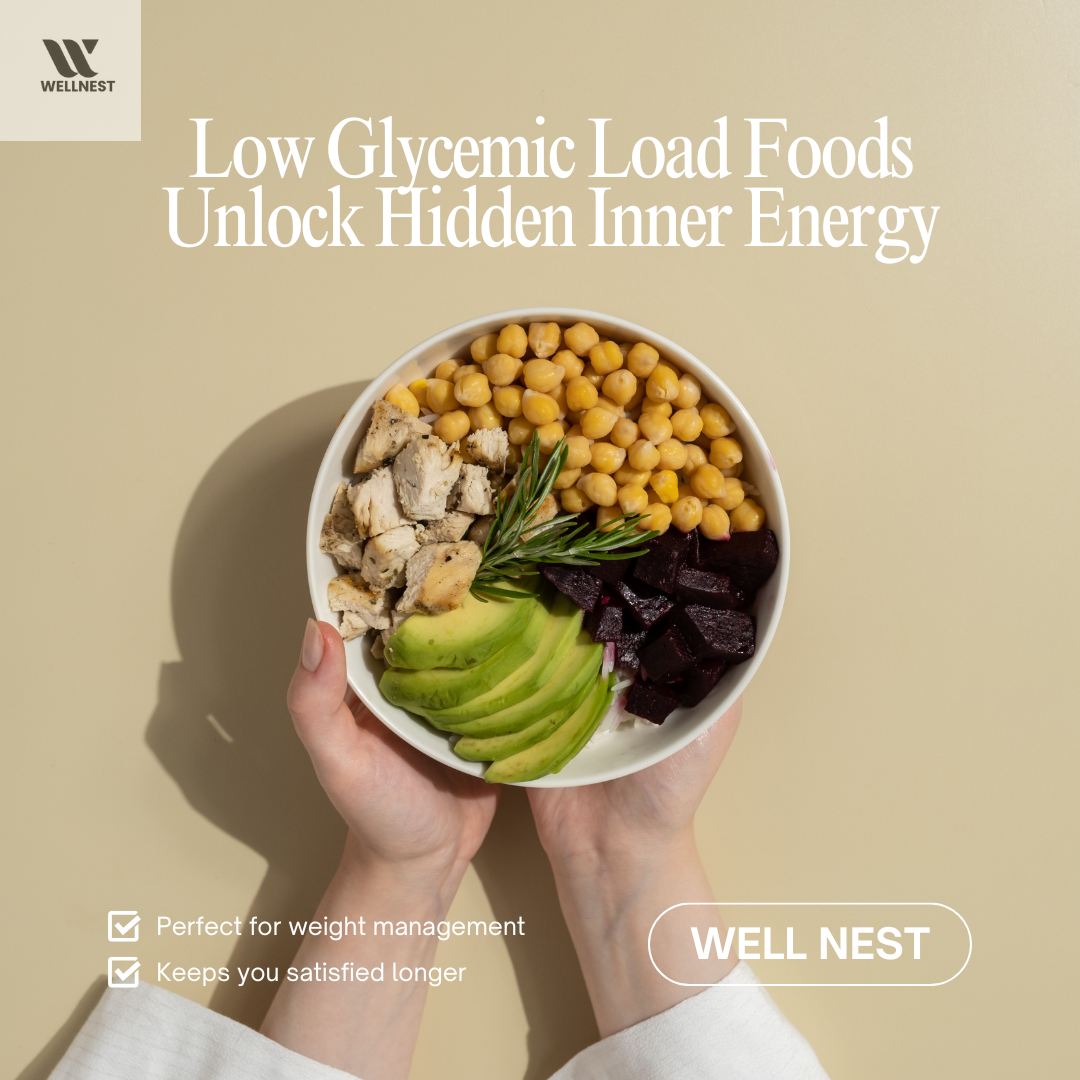
If you’ve been seeking a simple, sustainable science-based approach to energy-boosting, blood-sugar-stabilizing or weight management that does not involve deprivation or dieting, it’s possible the concept of low glycemic load foods makes sense. This guide breaks it down in plain English and provides you with practical tools—including food lists, real-life examples, and tips—to help you eat better without the confusion or stress.
What Exactly *are Low Glycemic Load Foods and Why Should I Care?
Let’s start with the basics. Glycemic index (GI) measures the speed at which foods raise your blood sugar. But it doesn’t take into consideration serving size. That’s where the concept of glycemic load (GL) comes in.
Glycemic load = (GI × grams of carbs per serving) / 100
Unlike GI, which evaluates only speed, glycemic load considers both the speed and amount of food, which a clearer picture of how food affects your blood sugar in real life.
Choose low glycemic load foods also because the other benefit is that your body absorbs carbohydrates slower. This helps:
Prevent sugar crashes
Reduce hunger and cravings
Maintain energy
Reduce risk of developing type 2 diabetes
Improve heart health
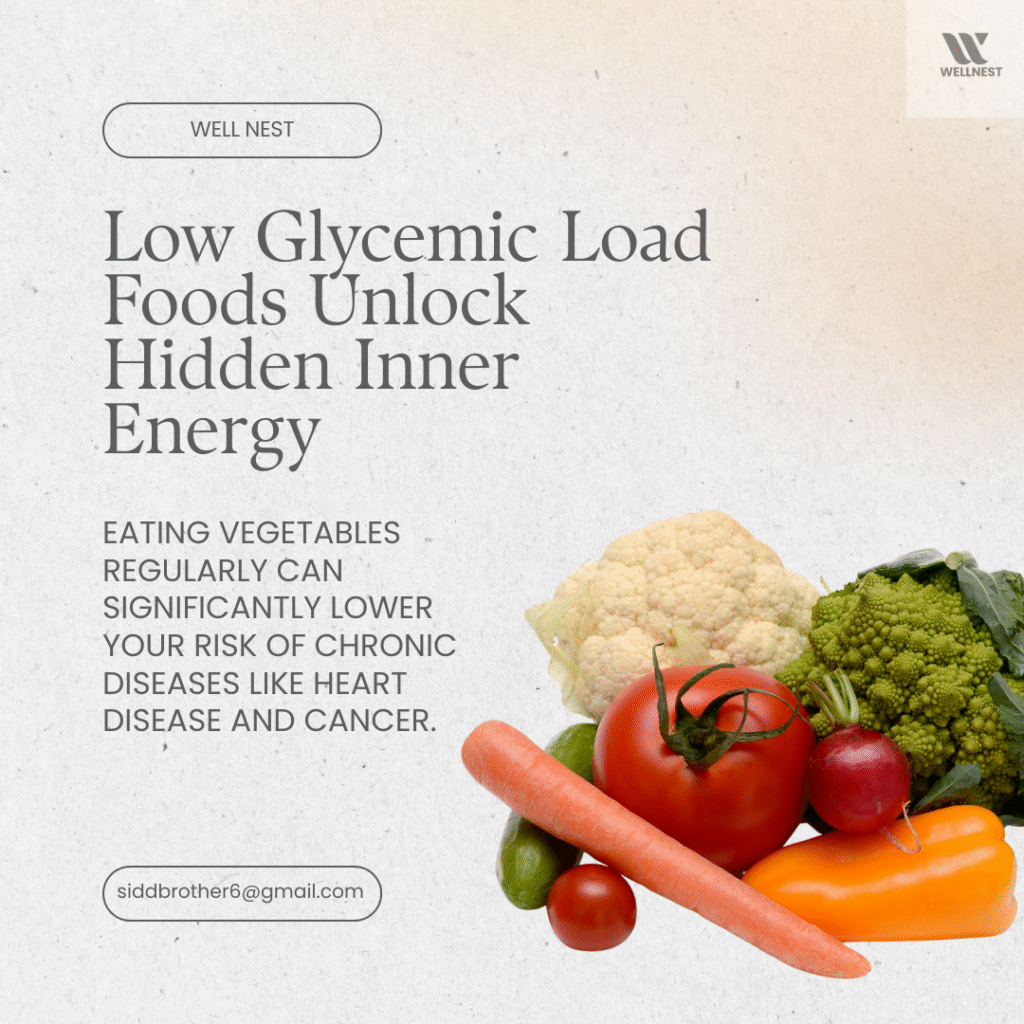
Low GI Foods List PDF (Free Download)
Looking for a quick reference? Well, we have free printable low glycemic index foods list PDF that includes:
Fruits, vegetables, grains, and legumes
Their glycemic index (GI) and glycemic load (GL).
Portion sizes
Printable formatting for easy access
Pro Tip: Have this list on your fridge or meal-planning app handy to easily make a meal decision.
Low Glycemic Load Foods List PDF: Your Everyday Handy Guide
Our low glycemic load foods list PDF Traffic light system of over 100 everyday products list with GL values (=10 servings).
Here’s a snapshot of what’s inside:
| Chickpeas | 100g | 28 | 3 |
| Lentils | 150g | 22 | 5 |
| Apple | 1 medium | 40 | 6 |
| Broccoli | 1 cup | 15 | 1 |
| Greek Yogurt (plain) | ¾ cup | 35 | 3 |
This printable list makes meal planning for balanced meals easy, so there’s no more guesswork!
Low GI Fruits You Can Eat Every Day
There are many fruits that taste delicious and are still low on the glycemic chart. Some low gi fruits you may want to incorporate into your daily regimen include:
Apples – GI: 40, GL: 6
Grapefruit – GI: 25, GL: 3
Berries (strawberries, blueberries) – GI:40,GL:5
Pears – GI: 38, GL: 4
Oranges – GI: 42, GL: 5
Tip: Opt for whole fruits versus juices to get the benefits of fiber and blood sugar control.
What Are the Top 10 Low GI Foods to Include in Your Diet?
In this article you’ll find a selection of the best 10 low glycemic foods that are beneficial and blood sugar-friendly.
Lentils
Chickpeas
Quinoa
Sweet Potatoes
Greek Yogurt (unsweetened)
Apples
Berries
Leafy Greens
Nuts, such as almonds and walnuts
Eggs
All of these have a low glycemic load, and they are either high in protein, fiber, or healthy fats. There are foods with zero glycemic index and do not have any effect on blood sugar. This is because some do not contain carbohydrates at all.
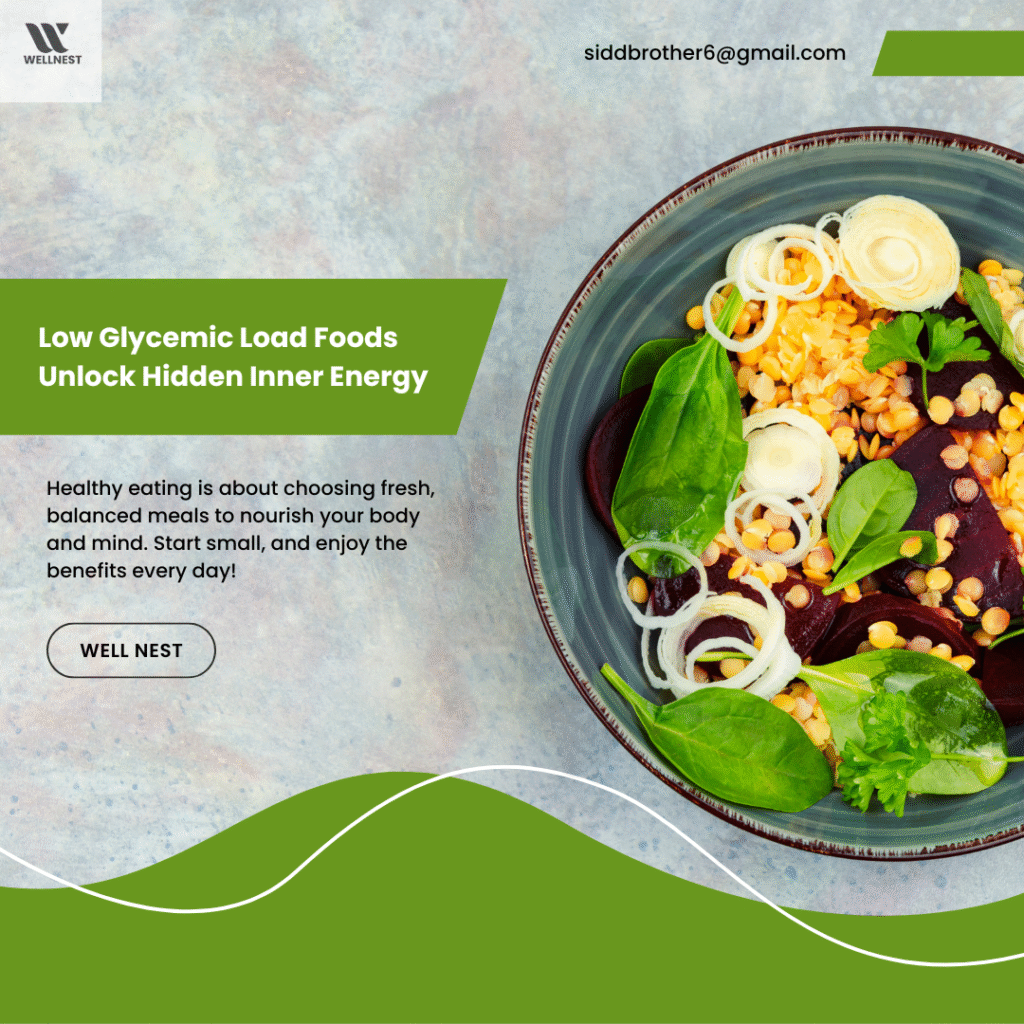
Zero Glycemic Index Foods That Stabilize Your Blood Sugar
There are foods with no carbs, and how your blood sugar responds depends on this index. They are:
Meat (preferably beef, lamb, poultry)
Fish & seafood (such as salmon, tuna, shrimp)
Eggs
Cheese (moderately)
Oils (For example, olive oil, coconut oil, butter)
They have a glycemic load of zero, and they can be the perfect complement to your meals when you need to.
Printable list of low-glycemic index foods for quick meal planning
A printable list of low-glycemic index foods saves time you might spend planning your meals, whether at the grocery stores or planning for their preparation.
Therefore, your list should comprise:
Whole fruits and non-starchy vegetables
Whole grains such as barley and quinoa
Legumes and lentils
Low-fat dairy
High-fiber breads and pastas
Here is a free printable version.
Low Glycemic Index Defined: In Simple Terms
But what is “low glycemic index” anyway?
It is what a food does when it causes sugar to enter your bloodstream store up gradually and steadily.
GI is rated on a scale from 0 to 100
Low GI = 55 or below
Medium GI = 56–69
High GI = 70+
But keep in mind: Glycemic index doesn’t account for portion size — which is why glycemic load can be the more reliable guide.
Low Glycemic Index Foods Chart for Wiser Choices
Enjoy this low glycemic index foods list and create a plan:
| White Rice | 73 | 28 |
| Quinoa | 53 | 10 |
| Banana | 51 | 13 |
| Apple | 40 | 6 |
| Lentils | 22 | 5 |
| Whole Wheat Bread | 51 | 9 |
While GI is helpful when used in conjunction with low GL, both alone aren’t the best scoring system in order to balance a healthy blood sugar load per meal.
How to Create a Low Glycemic Load Meal Step by Step
It’s simple to build a healthful plate when your focus is balance:
Step 1: Pick a Smart Carb
Choose foods like:
Lentils
Quinoa
Sweet potatoes
Step 2: Add a Lean Protein
Such as:
Grilled chicken
Tofu
Eggs
Step 3: Don’t skimp on healthy fats
In addition to protein, aim for some healthy fats.
Add:
Avocados
Olive oil
Nuts
Step 4: Load Half Your Plate with Veggies
Non-starchy options:
Broccoli
Zucchini
Bell peppers
The result is that natural balance, which helps make sure the meal you’re eating has a low glycemic load to maintain your blood sugar and energy levels.
In Conclusion on Low Glycemic Load Foods
You don’t need any of that extreme dieting or food fads. By understanding and using low glycemic load foods, you can:
Feel fuller for longer
Keep your energy steady
Lower risk of chronic issues
Eat with No Guilt and No Stress
Begin by swapping one high-GL food a day for one lower on the spectrum. Over time, these baby steps add up to big health results.
