
They’re vibrant, creamy and ubiquitous — from the local smoothie shop to social media. But are acai bowls actually good for you or just another wellness trend with a health halo?
Let’s get into the specifics, benefits and pluses of this popular purple indulgence.
What Is Acai Bowl? Making Sense of the Trend Everyone Is Talking About
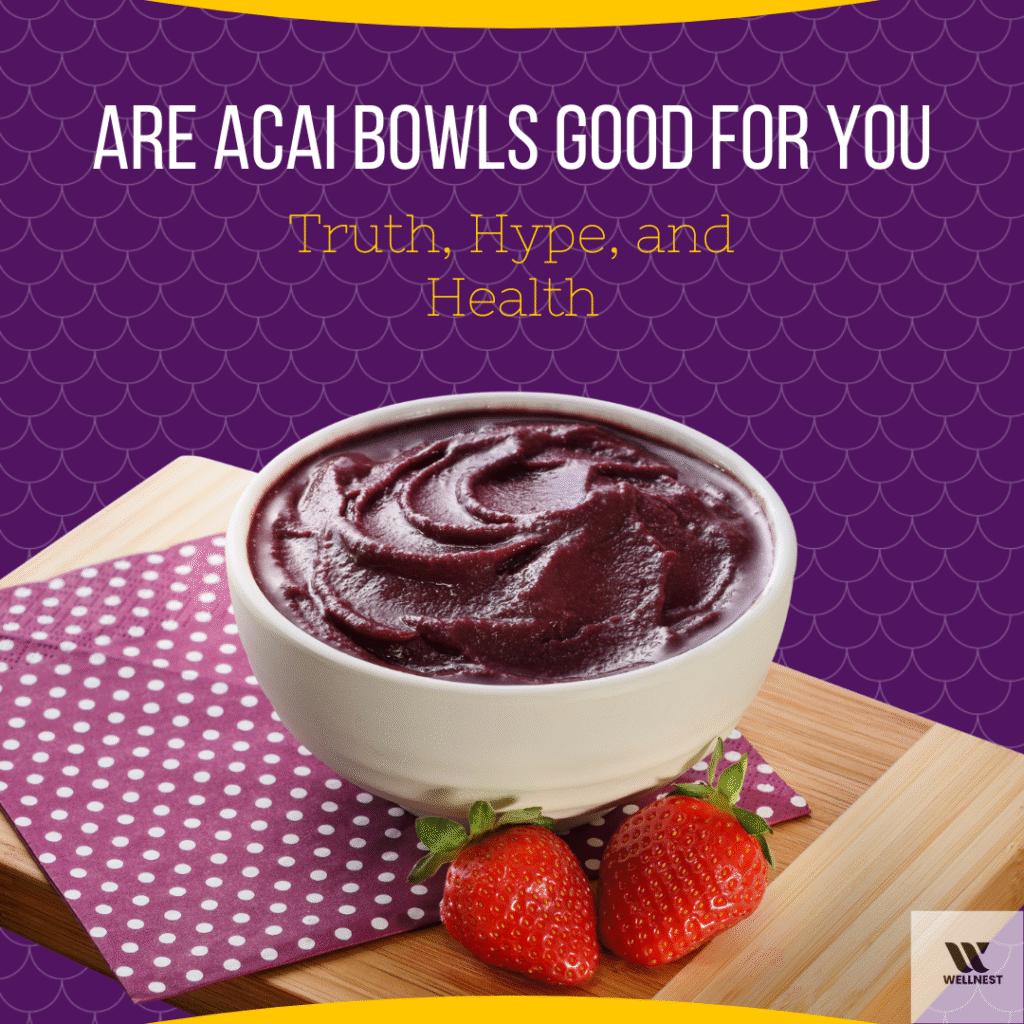
Acaí bowl: A thick, smoothie-like dish served in a bowl to be eaten with a spoon. Its superstar ingredient is the acai berry (pronounced ah-sah-EE), a small, dark purple fruit from Central and South America.
It’s hard to come by fresh acai, not only because the fruit spoils on the day it is picked. Instead, it’s sold as:
Acai puree, frozen (unsweetened or sweetened)
Acai powder
The base is then mixed with frozen fruit, plant-based milk, or yogurt only to be jeweled with granola, banana circles, slices of strawberries, chia seeds, or flakes of coconut.
While it may sound healthy, its nutritional content will vary based on what goes into the bowl — how much sugar is added, for instance.
What Does Acai Taste Like?
If you haven’t tried it before, you might ask yourself “what is the taste of acai?” It’s not as sweet as most other berries. Its flavor is sometimes described as earthy, slightly sour and somewhat similar to dark chocolate or red wine.
Due to that light bitterness, much of the commercial formulations blend acai with sweeter fruit or juices to make it more palatable — and also add flavor and sugar.

What’s Good About Acai Bowls? The Nutritional Benefits
When made right, acai bowls can deliver several actual health benefits.
Rich in Antioxidants
Acai berries contain anthocyanins, a type of antioxidant that helps protect cells from being damaged by the free radicals in your body. Studies have shown that these compounds benefit heart health, brain function and longevity in general.
Good Source of Fiber
A standard acai bowl (free of added sugar) offers dietary fiber, which promotes regular digestion, reduces cholesterol and helps regulate blood sugar.
Contains Healthy Fats and Nutrients
Acai pulp contains low levels of omega‑3 and omega‑6 fatty acids, although levels of the lipids, palmitic acid, oleic acid, and linoleic acid rise steeply in vitro when compared to the total lipid content of the fruit. When you top it with chia seeds, nut butter or hemp seeds, your bowl becomes even more densely packed with nutrients.
May Help with Heart and Brain Health
Antioxidants in acai may fatty fish Reduce blood sugar & Supplements for diabetes Decrease pain and muscle damage Increase energy expenditure: Create account Recover password -Google Acai Berry… antioxidant anthocyanins, compounds that make up a part of the berry’s color −DdW Consequently, Açaí is …. Research indicates that acai berries can help to prevent health issues related to oxidative damage. clear damaged cells through a process called autophagy. This may reduce the risk of neurodegenerative diseases over time.
Do Acai Bowls Have A Lot of Calorie?
This is where things can get tricky.
Pure unsweetened acai has only about 70 calories per 100 grams, compared to the more than 600–800 in commercial bowls — most of which comes from additional sugars and toppings like granola and honey.
For instance, a large acai bowl from one of the larger chains can pack over 75 grams of sugar — more than double what the American Heart Association recommends for an entire day.
Tip: Opt for unsweetened acai and not too many toppings to keep your bowl filling without overdoing the calories.
Is Acai Bowl Good for Breakfast?
Absolutely — acai bowls can be a cool, super nutritious breakfast. They’re packed with carbohydrates, fiber and antioxidants that can give your energy a lift at the start of the day.
To keep them balanced:
Add in protein (such as Greek yogurt or some form of protein powder)
Incorporate healthy fats (such as almond butter or seeds)
Limit sweet toppings
This helps keep blood sugar even longer and prevents you from being hungry at least until lunchtime.
Are Acai Bowls Good for Losing Weight?
You may be wondering: Are acai bowls good for weight loss? It depends on how they’re constructed.
If portion-controlled and low in added sugars, acai bowls can be part of a weight management routine. The fiber helps decrease appetite, and the antioxidants may aid in metabolism and reducing inflammation.
But super-sized commercial bowls sometimes pack more calories than a full meal, and a gut-busting bowl of store-bought granola can run counter to your goals.
For weight loss-friendly acai bowls:
Stick to ~400 calories
Use unsweetened acai
Mix in some protein and good fats for fullness.
Can You Eat Acai Bowl Every Day?
So is it bad to eat an acai bowl every day? Not necessarily — but it depends on your overall diet.
If you’re consuming unsweetened acai, enjoying moderate portions and aren’t forgetting about other nutrient-dense foods, then eating a bowl each day is a-ok.
But eating sugar-laden acai bowls on the daily could lead to weight gain, blood sugar spikes and nutrient imbalance.
The bottom line: Acai bowls as a daily breakfast are awesome, if they’re made at home, and balanced out without being pumped full of sugar.
Is Acai Good for Diabetics?
One question often asked is, is acai good for diabetics? The answer: Yes, but only if done right.
Acai itself has low glycemic index, so it doesn’t lead to big spikes in blood sugar. It’s also rich in fiber and healthy fats, which contribute to blood sugar regulation.
But sweetened ones and fruit juice can add a lot of sugar. For people with diabetes:
Choose unsweetened acai puree
Avoid honey or syrupy toppings
Apply some protein or healthy fat to slow sugar absorption
Is Oakberry Açaí Healthy?
When it comes to acai bowls, Oakberry is known as one of the best out there in the world. Their bowls are made with organic acai and contain no artificial colors or preservatives — but taste great!
But depending on the toppings, Oakberry bowls can still be packed with sugar and calories. For a healthier option, choose:
Unsweetened base
Nuts and seeds in place of sugary granola
Natural fruit as opposed to syrup with added sugars
The Verdict: Oakberry can be healthy – if you make the right choices.
Here’s how to make your own acai bowl at home.
Creating your own acai bowl maintains control of ingredients.
You’ll need:
1 package unsweetened frozen acai puree
½ banana (frozen)
¼ cup unsweetened almond milk
¼ cup berries
1 tbsp almond butter
1 tsp chia seeds
2 tbsp homemade granola
Instructions:
Combine the acai, banana, berries and almond milk in a blender until smooth.
Pour into a shallow bowl.
Add a dollop of almond butter, sprinkle the chia seeds and granola on top.
Enjoy immediately!
This version delivers antioxidants, fiber and healthy fats — without the sugar spike.
End Message: Are Acai Bowls Healthy for You?
Yes — acai bowls can be healthy, if you prepare them with unsweetened acai and other nutritious ingredients like fresh fruit and acai bowl toppings that make the dish more of a balanced meal than an indulgent dessert.
They are packed with antioxidants, fiber and heart healthy fats which makes them a great choice for breakfast or post workout meal.

