The hot flashes, mood swings and night s w eats are things most people have heard about. But few are aware that strange symptoms of low estrogen can appear on your skin, in your gut, in your eyes, in your energy levels and even in your mental acuity.
Estrogen is a major factor in your health that goes far beyond reproduction. Symptoms can manifest in strange, ambiguous ways, and sometimes even frightening ones. When they unexpectedly drop too low. This primer distills it all in clear, friendly language so you can finally hear what your body’s been trying to say.
Let’s take a look at the less known symptoms, why they occur and what you can do to find relief.
Bizarre Symptoms of High Estrogen versus Low Estrogen Symptoms
Hormone imbalances may not all go in one direction. Many readers want to know if their bodies are responding poorly to low estrogen, high estrogen or both.
A quick breakdown:
High estrogen symptoms may include
Weight gain in hips/thighs
Tender breasts
Mood swings
Bloating
Heavy periods
Headaches
Low estrogen symptoms may include
Dry skin
Fatigue
Hair thinning
Trouble sleeping
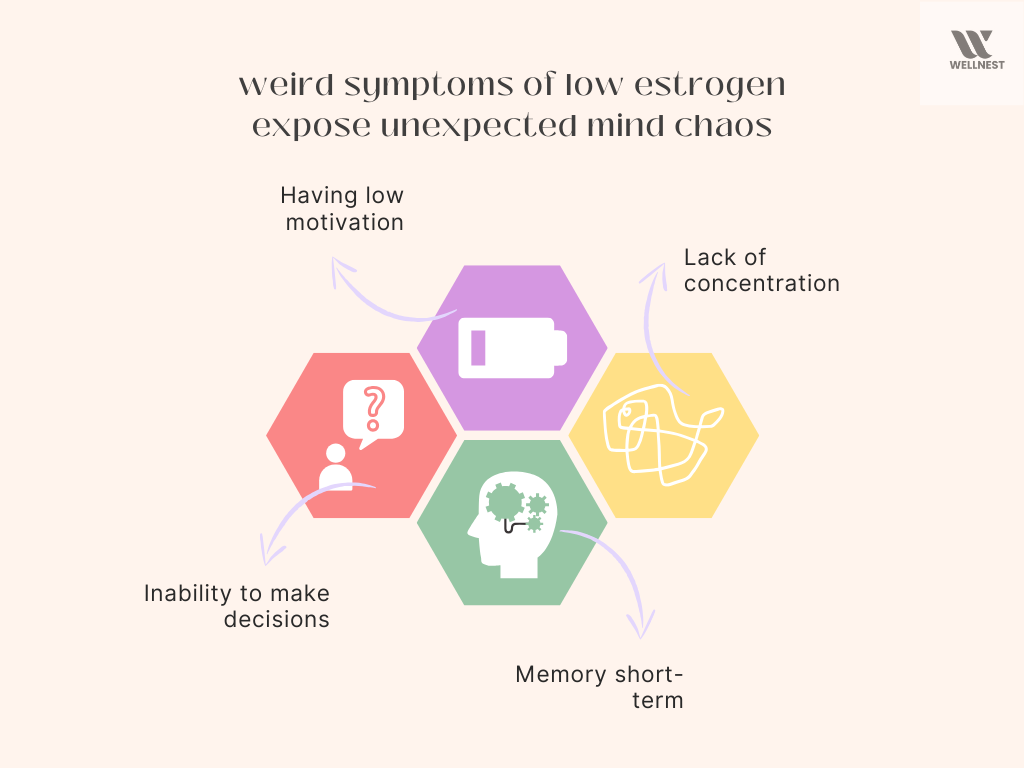
Brain fog
Vaginal dryness
High estrogen vs low estrogen symptoms It’s also important to compare high and low estrogen symptoms.
These symptoms frequently run together, and self-diagnosis consequently becomes more challenging.
A simple example:
“You might feel anxious and bloated with high estrogens, but you might feel anxious and tired with low estrogen.”
That’s why a health care provider will often order hormone testing to examine levels of estrogen, progesterone and other hormones such as FSH and LH.
Low Estrogen and Progesterone Symptoms
The mere fact that these hormones drop is the cause of increased symptoms, but the combination of estrogen and progesterone adds fuel to the fire rather than having one offset the other.
Learn more:
Common combined symptoms:
Irregular periods or missed cycles
Insomnia or being wide awake at 3:00 AM
Severe mood swings
Water retention
Low libido
Headaches before periods
Anxiety or restlessness
Anecdote:
One woman reported that she felt she was “losing her spark” as she found herself unable to remember basic job items or crying easily. Her doctor later verified that her estrogen and progesterone had fallen more quickly than typical.
Vitamins to Increase Estrogen Levels
Certain nutrients are believed to stimulate the body’s own estrogen production. They aren’t antidotes to medical treatment, but research has found that eating well can help support hormonal health.
Vitamin D
Being a source of phytoestrogens, it helps balance reproductive hormones and promote bone health.
Vitamin B6
“aids in hormone control and mood regulation.
Omega-3 fatty acids
May support inflammation associated with hormonal imbalance.
Magnesium
Aids in stress reduction and hormone balancing.
Phytoestrogen-rich foods
Linked to mild estrogen-like benefits:
Soy
Flaxseed
Lentils
Chickpeas
Speak to a health care provider before taking a supplement.
Causes of Low Estrogen in 30s
Some people think low estrogen occurs only during menopause. But other potential causes of low estrogen in 30s can include:
Stress and burnout
High cortisol disrupts estrogen production.
Excessive exercise
Typical in athletes or those training vigorously.
Severe or very rapid weight loss -Eating disorders
The body reduces estrogen in times of poor nourishment.
Genetic conditions
Such as Turner syndrome or Fragile X.
Thyroid or pituitary disorders
These glands communicate with the ovaries.
Ovary-affecting medical treatments
And radiation, chemotherapy or excision of an ovary.
Autoimmune disorders
Which may attack ovarian tissue.
Anecdote:
One 32-year-old runner explained she trained for a marathon, then stopped having periods. Her doctor diagnosed hypothalamic amenorrhea caused by stress + overtraining.
Symptoms of low estrogen after menopause
The body still makes small amounts of estrogen after menopause, but hormone levels are significantly lower than when a woman is still menstruating. This is why some people develop new or recurring symptoms years after menstruation ceases.
Learn more:
Postmenopausal low estrogen symptoms:
Vaginal dryness
Pain during intercourse
Frequent UTIs
Sleep problems
Dry eyes
Hair thinning
Bone density loss
Brain fog
Mood changes
Joint pain
These symptoms frequently get worse without any kind of treatment or changes in your lifestyle.
Treatment for Low Estrogen
What’s effective for one patient may not be so for another. The right plan varies by age, symptoms, medical history and the levels of hormones.
Here, in easy step-by-step detail, are the basic choices.
Step 1: Lifestyle Adjustments
Eat nourishing, balanced meals
Learn more:
Exercise moderately
Don’t engage in intense training but keep active to help take some stress off and balance out hormones.
Manage chronic stress
Meditation, deep breathing exercises, gentle yoga and sometimes journaling can be helpful.
Improve sleep habits
Low estrogen disrupts circadian rhyth
Step 2: Medical Options
Hormone Replacement Therapy (HRT)
Learn more:
Forms include:
Pills
Patches
Vaginal estrogen creams
Rings
Inserts
HRT can relieve:
Hot flashes
Night sweats
Vaginal dryness
Sleep issues
Mood swings
Bone loss
Low-dose vaginal estrogen
Aids dryness, UTIs and pain during sex.
Non-hormonal medications
People who can’t take estrogen.
Strange Signs of Low Estrogen — The Complete List Explained
Here’s the complete list of unusual symptoms people miss.
Skin, Hair and Nail Symptoms
Dry, flaky skin
Redness and irritation
Sudden acne
Brittle nails
Hair thinning
Sudden chin hair
Slower hair growth
Why it occurs: Estrogen helps to produce collagen, keratin and natural oils in your skin.
Sensory Symptoms
Electric shock sensations (“body zaps”)
Tingling hands or feet
Light sensitivity
Blurry vision
Dry eyes
Dizziness
Why it happens: Estrogen helps to support nerve function and tear production.
Mood and Cognitive Symptoms
Brain fog
Memory lapses
Anxiety
Irritability
Panic attacks
Loss of focus
Why it happens: Estrogen has an effect on serotonin, dopamine and cognitive function.
Digestive Symptoms
Bloating
Gas
Constipation
Diarrhea
Acid reflux
Why it happens: There are estrogen receptors in the gut. Hormonal changes in the body can slow or speed digestion.
Energy and Sleep Symptoms
Fatigue
Insomnia
Night sweats
Restlessness
Why it happens: Estrogen plays a role in balancing sleep-wake cycles and body temperature.
Pain and Discomfort Symptoms
Breast tenderness
Headaches
Muscle tension
Joint pain
Burning mouth sensation
Why it happens: Estrogen has anti-inflammatory properties and impacts nerve pathways.
Reproductive and Urinary Symptoms
Low libido
Vaginal dryness
Painful intercourse
Frequent urination
Urinary urgency
Recurrent UTIs
Why it occurs: Low estrogen causes urinary and vaginal tissues to slim.
When You Should See a Doctor
Seek medical support if:
Symptoms appear before age 40
Periods stop unexpectedly
Mood swings become intense
Sleep is consistently disrupted
UTIs become frequent
Bone pain develops
Testing can include:
Estradiol (E2)
Estrone (E1)
FSH
LH
Thyroid panel
Cortisol
DHEA
Final Takeaway
The strange symptoms of low estrogen can be baffling, sporadic and life-disrupting. But they’re also shockingly common — and entirely real. If you are feeling these symptoms, your body is trying to let you know there’s a chance in hormones.
The good news?
You have options.
But with some lifestyle modifications, food-based support and helping hands from the medical community — which may need to include getting on or back on hormone medications if needed — you can reign in your symptoms and begin to feel more like yourself again.
